Posts

Showing posts from June, 2023

The Prophetic Practice Related to the Standing Portion of the Islamic Prayer (As Salaat)
Image
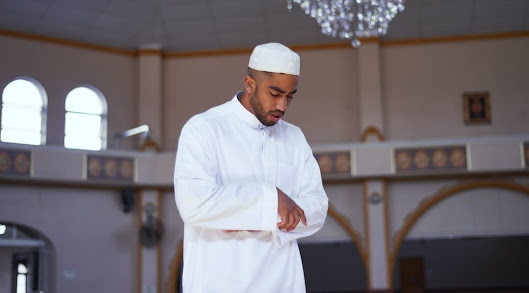
The Prophet ( SWAS ) used to stand for prayer whether they were obligatory prayers or voluntary prayers, except duing travelling when he ( SWAS ) used to pray the voluntary prayers sitting while mounted on his ride. In case of praying while susceptible to attack from an enemy he ( SWAS ) taught us to pray standing or mounted according to the situation. The Prophet ( SWAS ) prayed sitting while he ( SWAS ) was ill and when he ( SWAS ) was weak with illness in the last year of his life. When he ( SWAS ) led congregational prayers in a sitting position due to illness he ( SWAS ) instructed his followers to sit when he ( SWAS ) sits during the prayer, as the congregation is supposed to follow the imam (prayer leader). In 1979, in his last year, when Maulana Mawdudi, led prayers in Buffalo, NY where he was being treated for cancer, he did so sitting due to weakness and the congregation prayed behind him in a sitting position as well.  The Prophet ( SWAS ) instructed us to pray standing...

Facing the Kabah During the Islamic Prayer

Image
There are some formal Islamic prayer ( salat ) that are obligatory while come are voluntary. Either one can be prayerd dismounted or mounted on an travelling animal or vehicle. There is more flexibility in terms of the injunction to face the Kabah (in Makkah ) during the voluntary prayer while travelling as we see from the practice of the Prophet ( SWAS ). When the Prophet ( SWAS ) prayed dismounted he always faced the Kabah (after the command to do so was revealed), whether he was praying the obligatory or voluntary prayers. He is known to have ordered his companions to improve their prayer by instructing "When you stand for prayer, perform abolution perfectly, then face the Qiblah (the Kabah in Makkah) and say Takbir ( Allahu Akbar -- the proclaimation that God is the Greatest). During the journey, he would pray voluntary prayers and the w itr (last prayer of the day which is characterized by having odd number of prayer units) prayer on his mount wherever it faced carrying him....

Methodology of Learning the Islamic Prayer (As Salat)

Image
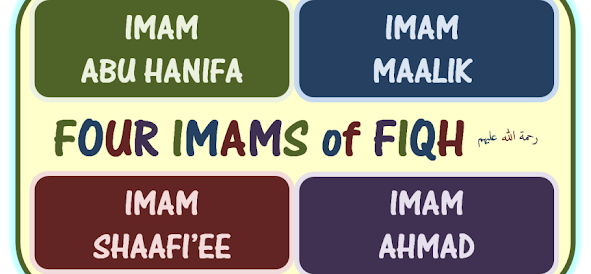
Typically Muslims born into the faith, learn the Islamic prayer ( salat ) based on one of the four schools of Islamic jurisprudence ( Hanafi , Shafii , Hanbali , Maliki ). The four schools of Islamic law teach the Islamic prayer a little differently based on their differing methodologies. When the founders of these schools of jursiprudence started teaching the Islamic prayer, not all prophetic sayings/practices ( ahadith / sunnah ) were known, collected, and analyzed as it is today. Moreover, the founders of these schools explicitly instructed that their opinions should be discarded in the face of authentic Prophetic evidence they were not aware of concerning anything they teach contradictory to it.  Although all four schools of Islamic law are based on the Quran and the Sunnah (Prophetic pratice), their methodology is slightly different. If we consider it simply, Hanafi jurisprudence leans more on following analogical reasoning ( qiyas ) in issues where the Quran and the Prophet...

Why Pray Like the Prophet (SWAS)?

Image
In Islam, the ritual prayer ( as salah ) is the differentiator between belief and disblief. In English, the word "prayer" is often used for supplication (dua), i.e. beseeching Him with words in a state of humility and dependance. In Islam, there is a difference between a supplication ( dua ) and ritual prayer ( as salah ). In addition, to conversing with God ( Allah ), the ritual prayer ( as salah ) in Islam, involves set physical movements and verbal experessions. The Prophet ( SWAS ) prayed differently based on different times and situations in his mission.  In his book, "The Salah, The Prophet's Prayer Described", Shaykh Al Albani ( RA ), describes the variations that the Prophet ( SWAS ) applied to his prayer according to his sunnah (practice)   as described in authentic Prophetic sayings ( ahaadith ). The Prophet ( SWAS ) is reported to have said that we should pray as he was seen praying. The way that the Prophet ( SWAS ) performed the salah  is the best w...

The Islamic Prayer

Image
Greetings of Peace, Blessings, and Guidance. The Islamic prayer or "salaat" is very special ritual, which a practicing Muslim performs at least 5 times a day. There are additional optional times for prayers like before the start of work in the morning, i,e. the Duha or Chast prayer, the night prayer, i.e. Qiyaam Ul Lail, the supperogatory prayers (Nafl) made before deciding a matter i.e. Istikhara prayer, entering a mosque, i.e. Tahiyyat Ul Masjid, etc. The salaat is a connection between humans and their Creator in which the worshipper directly converses with their Maker. It is a very comprehensive form of worship which has physical, verbal, social, mental, and spirtiual aspects, making it a holistic means for believers to "lift" their souls. Just like a snake goes into a trance led by the snake charmer, the salaat is an opportunity for a worshiper to go into spritual estascy at least 5 times a day, the timing of which is divinely ordained by our Creator to be such ...